Health and Medicine
 PUBLISHED




From the "back of your hand" to your "ass and elbows", the human body is the quintessential baseline for knowledge and understanding. And yet there are so many things about it that are still a mystery to us: what’s up with yawning, for example; whether fingerprints truly are unique; why on Earth we’re all so caked up and hairy. Real important stuff.
The rest of this article is behind a paywall. Please sign in or subscribe to access the full content.But there’s one area of the body that’s been extra-overlooked, historically. Ignored by medicine for millennia, and only seen in full for the first time in 1998 – that’s less than three decades ago for a piece of anatomy that billions of people are intimately familiar with – and so “obscure” that it’s a common joke that half the world’s population couldn’t point to it on a live model: that’s right, we’re talking about the clitoris.
“There is a societal taboo attached to female sexuality,” said Ju Young Lee, a research associate at Amsterdam University Medical Centre in the Netherlands. “The taboo is an obstacle to conducting scientific investigation.”
“Much more awareness is required,” she told IFLScience. And, as coauthor of a new preprint study on the neuroanatomy of the clitoris, she’s aiming to provide it.
Not hidden, but ignored
It’s hard to comprehend just how overlooked the most sensitive part of the human body has been, historically speaking, so we’ll just say this: at least five male physicians have claimed to have “discovered” the clitoris over the centuries, unaware that it was already well-known by approximately half the people they interacted with on a daily basis.
Even despite this constant re-upping in the medical literature of the day, ancient, medieval, and Renaissance physicians continued to be utterly baffled by the clitoris. The organ, announced Charles Estienne in 1545, was used for urination – a wrong hypothesis, but at least a fairly reasonable one – while Realdo Colombo announced it as proof that women had no souls (don’t tell the manosphere). Galen thought it was a second penis – yes, second, as in one of two per body; Galen had some funny ideas about what, exactly, a vagina was – which would grow to monstrous sizes in lesbians specifically. That one is wrong too, obviously – perhaps he was thinking of hyenas.
Most problematic of all were those physicians who followed Vesalius – which, since he was one of the most influential anatomists of the Renaissance, was a lot of them. According to his model of the human body, the clitoris simply didn’t exist, at least in normal, healthy women – and so anyone who had one should get it snipped off. As late as the 1860s, you might be prescribed a clitoridectomy to “cure” anything from epilepsy to “hysteria” to simply enjoying sex a little bit too much.
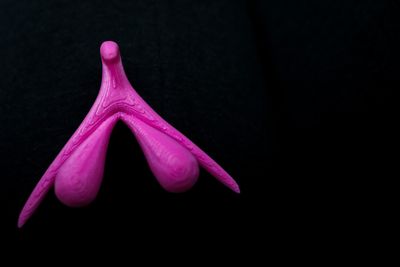
The clitoris is actually quite large!
And a century later, when your grandparents or perhaps even parents were already around, “most clinicians believed that stimulation of the clitoris produced ‘clitoral’ orgasm only in infantile women,” wrote Helen Singer Kaplan, the renowned sex therapist and founder of the US’s first medical school clinic for sexual disorders, in her seminal The New Sex Therapy. That term referred not to young adults or children, but “those who were fixated at an early state of development and had failed to achieve genital primacy,” she explained – meaning that “in short, retention of clitoral sensation was considered prima facie evidence of neurosis.”
And if the picture was bleak in the past, it’s not all that much better today. The clitoris “is not discussed,” Caroline De Costa, a professor of obstetrics and gynaecology at James Cook University, told The Guardian in 2020. “I go to conferences, I go to workshops, I edit the journal, I read other journals. I read papers all the time, and never do I find mention of the clitoris.”
A new map
It wasn’t until 1998 that urologist Helen O’Connell – the first female urologist in Australia, in fact – published what nobody had seen before: a full anatomical description of the clitoris. And what she found surprised people: “the clitoris is actually quite large!” Lee explained to IFLScience. “It is not a pea-size structure visible from the outside.”
But time moves on, and today we can do a lot better than photos of dissections. “We are part of a large international consortium, the Human Organ Atlas hub,” said Lee, “which aims to map out the human body using synchrotron imaging.”
“The clitoris is, of course, one of the human organs,” she added. “So it was important to include it in the project.”
It is perhaps only in this kind of holistic, whole-body approach that the clitoris could receive the attention it deserves. Thanks to science’s long history of shunning it, the organ has ended up kind of homeless, disciplinarily speaking: “urology has traditionally focused on the penis (and related oncology like prostate cancer),” Lee explained, “while gynaecology has focused primarily on reproductive organs like the uterus and ovaries.”
As an organ devoted seemingly entirely to sexual pleasure, and female sexual pleasure in particular – after all, branded and generic versions of Viagra are a billion-dollar business – the clitoris is an anatomical Bir Tawil: nobody wants to claim ownership. When the odd surgeon or medical student does happen to take a look, they invariably find something previously unknown: that the nerves of the clitoris are bigger and more numerous than anybody realized – only discovered in 2022 – or that they branch out into fine tendrils that, before 2020, had never made it into the medical literature.
The new study – the first to produce a 3D map of the nerves within the clitoris – has turned up similarly important discoveries. Synchrotron imaging is one of the most expensive, cutting-edge ways to see into our bodies, able to probe structures down to the micrometer. It allows researchers to see the kinds of tiny, intricate details impossible to see with the naked eye – things like the tree-like nerves within the clitoris glans, found and imaged for the first time by Lee and her colleagues (previously, the glans was often depicted as simply not having all that many nerves supplying it, which must have come as a surprise to anybody who owned one).
And all this is from just two specimens – the pelvises of two postmenopausal women who donated their bodies to science – and a limited investigation into only somatic sensory innervation. “[We] did not include a mapping of the autonomic nervous system, such as the cavernous or spongious nerves,” the paper cautions, and “the findings may not fully reflect the morphology of premenopausal individuals.”
Future cliteracy
Of course, any study that furthers knowledge of the human body is to be celebrated. But this one is surely more than just a point of interest, as the clitoris “has been deleted intellectually by the medical and scientific community, presumably aligning attitude to a societal ignorance,” O’Connell told The Guardian last month.
This study is just a beginning. There should be more research on the anatomy and physiology of the clitoris.
Ju Young Lee
And a better understanding of the clitoris, particularly with regards to how and where the nerves branch out, may well mean measurable improvements in medical procedures and patient outcomes. For example, “we found that [the] clitoral hood and mons pubis are innervated by the dorsal nerve of the clitoris, the main sensory nerve for genital sensation,” Lee told IFLScience, which is important knowledge for treating female genital mutilation or performing cosmetic surgeries such as labiaplasties. “It implies that surgeries such as clitoral hood reduction may require more caution to avoid nerve damage,” Lee explained.
It's a big step forward – but it’s not enough. Even with this new investigation, the clitoris, and female genital anatomy in general, is still wildly understudied compared to male equivalents. The public understanding is even barer – a problem Lee hopes to remedy with a clitoris exhibition within Amsterdam University Medical Centre, inspired by the Vagina Museum in London.
“This study is just a beginning,” she said. “There should be more research on the anatomy and physiology of the clitoris.”
The study, which has not yet been peer-reviewed, is available via preprint server bioRxiv.


 1
1