Nature
 PUBLISHED


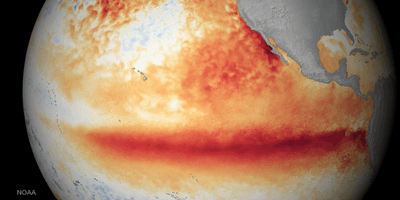


Two major weather agencies think it's increasingly likely that El Niño will form in the eastern tropical Pacific Ocean later this year. If these forecasts hold, we could face a dramatic reshuffling of global weather patterns, making it all the more likely that 2026 and 2027 will break global temperature records.
The rest of this article is behind a paywall. Please sign in or subscribe to access the full content.In their latest forecasts, the NOAA’s Climate Prediction Service (CPS) states there’s a 50 to 60 percent chance of El Niño forming in the late Northern Hemisphere summer of 2026, while the Australian Bureau of Meteorology says there’s a “possibility of El Niño development from June.”
However, just like any long-term weather forecasts, it’s difficult to foresee these things several months in advance, so take the predictions with a pinch of salt.
What Is El Niño?
The El Niño–Southern Oscillation (ENSO) is a naturally occurring climate cycle driven by fluctuations in ocean temperatures and atmospheric pressure across the eastern tropical Pacific Ocean. These conditions here have a knock-on effect that's felt across the globe, influencing everything from rainfall to droughts, tropical cyclones, heatwaves, and more.
The ENSO shifts between three phases: El Niño (the warm phase), La Niña (its cooler counterpart), and a neutral state. The world is currently still in a La Niña state, although it appears to be weakening. NOAA’s models suggest there’s a 60 percent chance it will transition from La Niña to ENSO-neutral between February and April 2026. Once this occurs, it’s also likely that it will tip over into an El Niño, although by no means certain.
What Effect Will El Niño Have On The World?
So what does all this mean? In a nutshell, El Niño tends to increase global temperatures by up to ~0.2°C, fueling extreme weather like droughts and floods. In a world already warmed by greenhouse gas emissions, an El Niño event can add an extra temperature boost, increasing the chances of record-breaking warmth.
The year 2025 was still one of the warmest years on record globally, despite ending with a cooling La Niña. Without its cooling influence, plus the warming effect of El Niño, 2026 and 2027 could be exceedingly warm. The past 11 years have been the 11 warmest on record, so if El Niño does rise up, it's very likely that the following couple of years will join those ranks.
Beyond global average temperatures, El Niño will bring widespread changes to the weather. Expect to see increased rainfall and potential flooding in the southern US and southern Europe, while northern US and Canada are drier and warmer than usual. Over in the Atlantic Ocean, El Niño actually weakens hurricane seasons, but strengthens hurricane activity in the central and eastern Pacific basins.
So, buckle up. Change is brewing in the eastern Pacific – and those changes are set be felt across the globe.