Space and Physics
 PUBLISHED



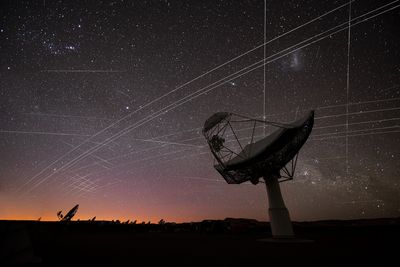


People should care about space. And not just because you have an interest in astronomy or curiosity about extraterrestrial life, you should care because, whether we like it or not, crucial sectors of our civilization rely on access to space. A few hundred kilometers above our heads, things are changing rapidly, and we should all be paying attention because it affects everyone on Earth.
The rest of this article is behind a paywall. Please sign in or subscribe to access the full content.It's commonly said that the average person relies on access to space about 30 times a day. Weather, telecommunications, navigation, banking, and more go through space. And your technology might access space without your knowledge hundreds of times more than you do.
Even if you decide to stop using a mobile phone, don’t check the weather, navigate by paper maps, and keep your money under a mattress, you will still indirectly benefit from space. Agriculture and farming, the transportation of goods, and many aspects of commercial supply chains depend on space.
With the importance of space, you would think it would be well regulated. Quite the opposite. The extent of all law regulating the activity of states beyond Earth is found in one two-page document from 1967, the Outer Space Treaty.
The treaty was good for its time, stopping space from becoming a theater of war, even a cold one. But regulation today isn’t just about states but also private corporations, something that wasn’t even considered almost six decades ago.

Orbital Space Around Earth Has Dramatically Changed
In less than a decade, the number of satellites has more than doubled due to launches of mega-constellations like SpaceX’s Starlink. There are over 18,000 satellites in orbit at the moment, and more are being added every day, with SpaceX just recently applying for an unprecedented 1-million-satellite mega-constellation.
That’s more than 50 times the number of satellites we have today and more than 100 times the number that were in space a decade ago. Those satellites wouldn’t be the only new ones up there, either, as other companies, countries, and organizations also want their own mega-constellations.
Space is big, but Earth’s orbit is not that big, and it has been estimated that if SpaceX did send 1 million satellites into orbit, they’d have to perform a collision avoidance maneuver every 0.03 seconds.
In the context of this change, photographer Max Alexander has crafted a unique exhibition. Called “Our Fragile Space”, it provides an incredible look at all the overlapping aspects of the threats from – and to – space.
“[The exhibition] is about being good stewards of that environment. It's not an unlimited resource. We've really turned it into part of the Earth's environment, and we need to protect it,” Alexander told IFLScience.
Losing Orbits Forever
SpaceX is already forced to perform an inordinate number of orbital shifts to avoid collisions. In the first six months of 2025 alone, Starlink satellites performed 144,404 “conjunction risk mitigation” maneuvers. And SpaceX isn’t the only player out there.
Previous research suggests there are serious safety and long-term sustainability challenges in the current approach of just sending satellites into space willy-nilly. On top of that, we risk losing access to certain orbits.
The problem is space debris. As of 2026, there are 36,000 tracked space debris objects larger than 10 centimeters in orbit. If we include everything above 1 millimeter, we are looking at a number that exceeds 100 million pieces of debris.
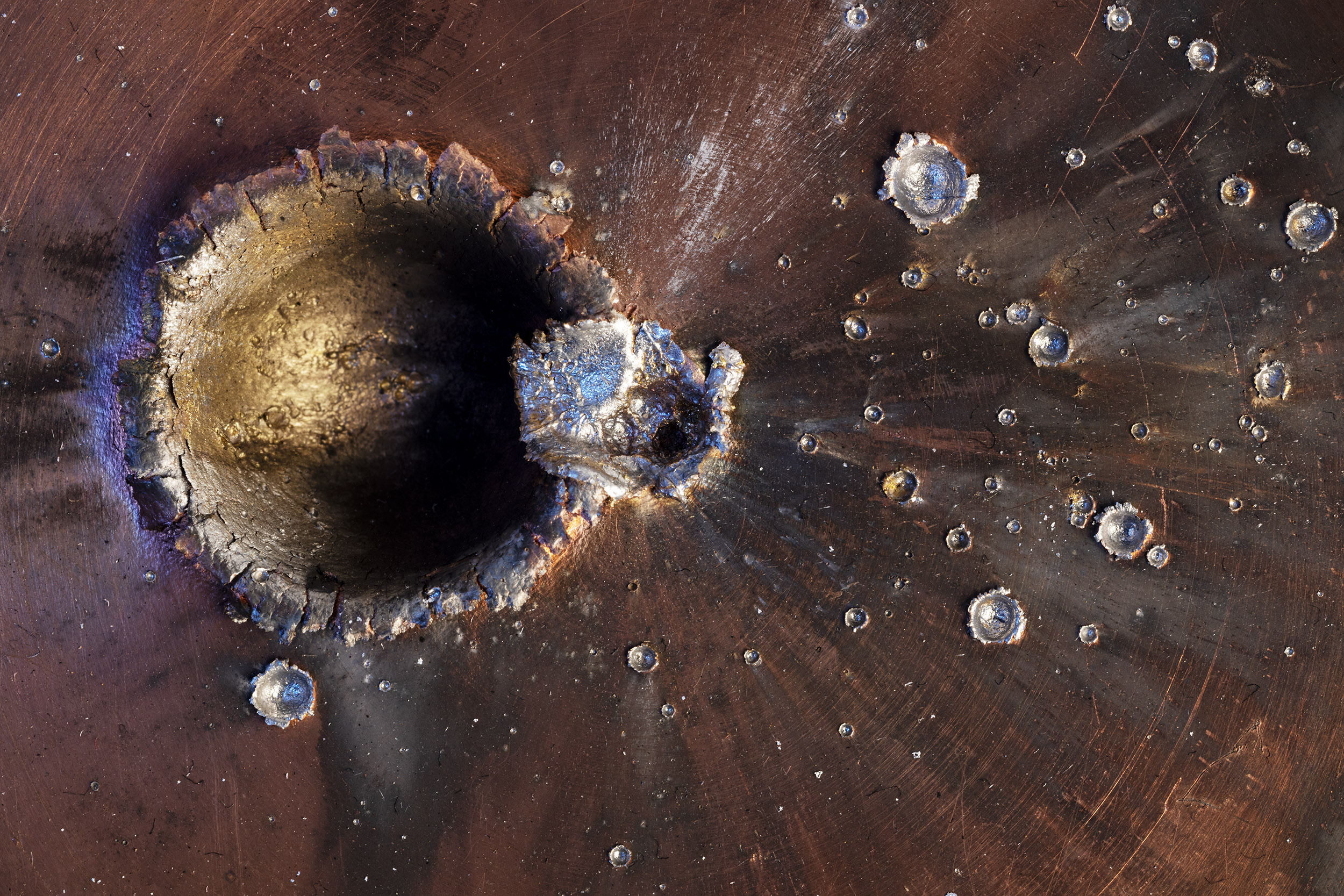
Specks of 1 millimeter might seem harmless, but when they are moving at several kilometers per second, they are anything but. An extraordinary photo, taken by astronaut Tim Peake following tutoring from Alexander, shows that one of those specks has already chipped one of the windows of the International Space Station.
.png "the chipped window on the iss")
The situation is serious now, but it’s set to get much worse. The concern is that a collision could spark a situation called Kessler Syndrome. Let’s imagine that one satellite hits another. You don’t end up with just two pieces of space junk. You could have thousands or more. Those pieces can then go on to hit other satellites, creating more debris at an exponential rate. This might lead to entire orbits being too dangerous to inhabit.
Only a few days ago, a Starlink satellite broke apart into tens of fragments – the second time this has happened without explanation since November last year. While the cause is still undetermined, orbital tracking company LeoLabs says it was likely due to an internal malfunction rather than a collision. In this case, says LeoLabs, the relatively low altitude of the fragments means they will probably de-orbit within a couple of weeks, but we may not always be so lucky.
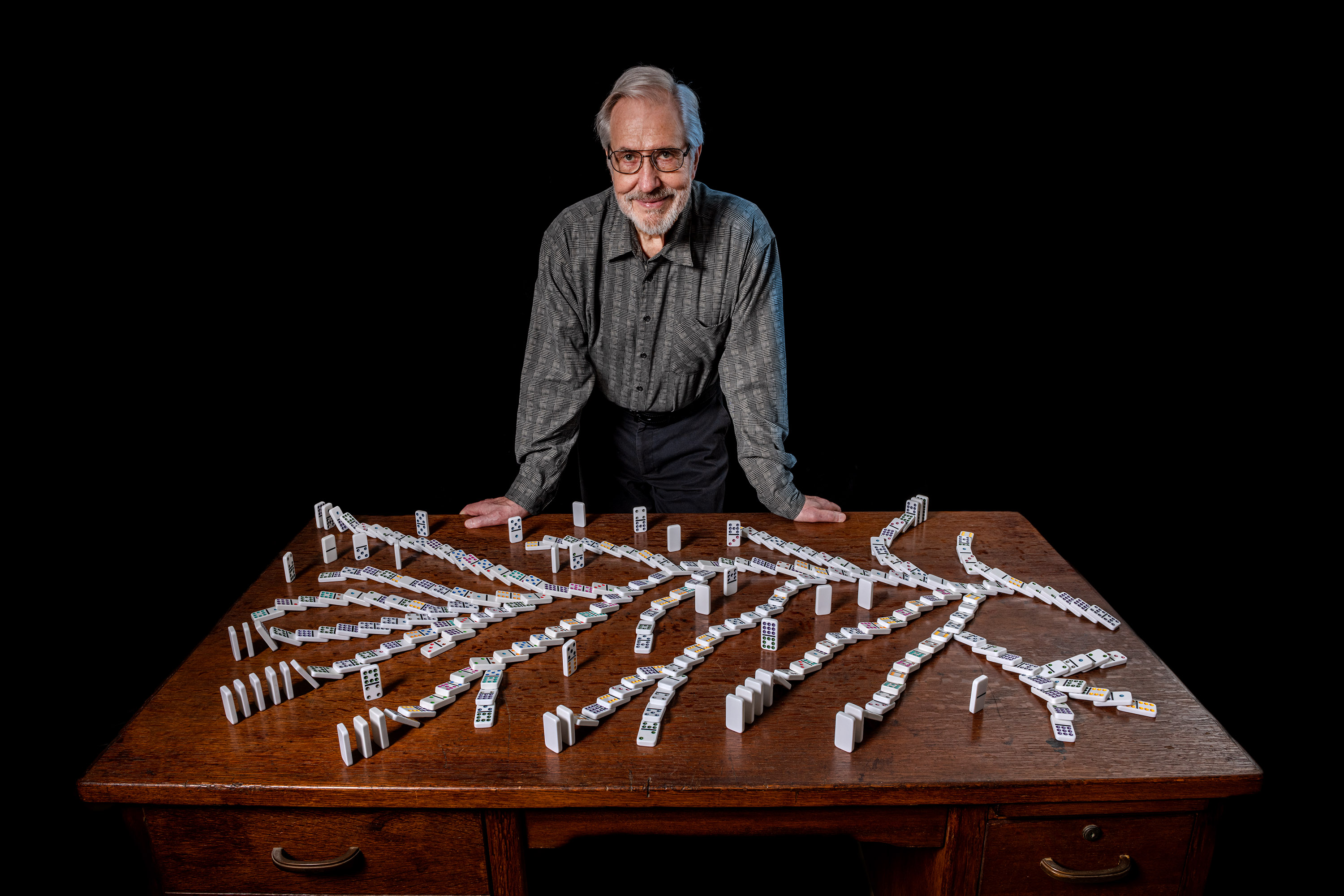
“About 18%, nearly one-fifth of the world's economy, is supported by the use of space. Our lives are really governed by it; people don't really know that,” Alexander told IFLScience. “[Space] is not going to go away. That's only going to increase over time, and we're better for it. However, like I said, it's not an unlimited resource up there. And if we lose those orbits in the future, we won't have those services.”
The Loss Of The Night Sky And More
The increase in satellites has tangible consequences on Earth as well. Light pollution is a major problem, and the ever-growing number of objects in orbit has been bringing it to places on Earth with no artificial light on the ground. The night sky is actually getting brighter faster than we predicted.
And light pollution isn’t just about spoiling people’s view of space, it is responsible for many adverse effects on plants and animals. The list of human health diseases that are linked or exacerbated by light pollution is very long, and it includes Alzheimer’s disease.
Light pollution is particularly damaging for Indigenous communities the world over, because many still rely on the night sky for their way of life. Satellites are also a problem for astronomical observatories, and there has been an uptick in satellite streaks photobombing their observations. Even telescopes in space aren’t safe.
“Billions are spent on astronomy observatories around the world, on ground-based observatories. And this is the public's money, and this is all our shared sky, so consideration needs to be given to that,” Alexander told IFLScience.
It’s not just optical observatories either. It’s radio observatories too. The next generation observatory SKAO, in South Africa and Australia, is meant to revolutionize our understanding of so many different radio phenomena. But that is threatened by radio frequency emissions from passing satellites.
Satellites in low Earth orbit are seen as objects with a finite lifespan, and they are decommissioned by burning up in the atmosphere at the end of their lives. That is positive for the space debris question, but we don’t know the consequences of releasing so many metal fragments into the atmosphere. Will they affect the ozone layer and the climate?
There’s also the issue of the sheer number of launches.
“To the extent that supplying and maintaining a population of so many objects would require potentially dozens of launches per day sustained over many years, there are real risks to the atmosphere in terms of emissions of black carbon, water vapor, and other substances,” said executive officer of Dark Sky Consulting John Barentine, in a conversation with IFLScience.
“As a result, we consider [the 1 million satellite proposal] to be the single greatest threat to space sustainability in history.”
Imagining A New Future For Space
The future could be bleak, but we could make it look great. If approaches to space were to change, we could make sure that the life of satellites is much longer, for example, by tackling the refueling issue (currently it is difficult to refuel satellites in orbit, so people would rather burn a satellite in the atmosphere to extend its life).
Alexander jokes that you don’t throw away a plane once you run out of fuel. The dream is a circular space economy where things aren’t wasted and where there are rules and regulations that protect the sky, orbits, and access to space.
“It's about peaceful coexistence. You need satellites for our lives, but, you know, you want to do that in a sustainable way,” Alexander told IFLScience.
“Our Fragile Space” is currently free to visit at the Burlington House courtyard in London with the support of the Royal Astronomical Society. It was previously exhibited at the United Nations in both New York and Vienna, the European Parliament in Brussels, and Lloyd's of London.

 1
1