Technology
 PUBLISHED
 1
1



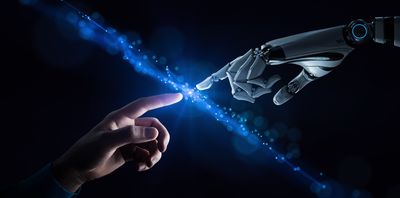


If there is one question that stands out as having become increasingly significant in recent years, it is "Will artificial intelligence ever become conscious?" Everyone from scientists and tech gurus to government figures has weighed in on the issue, arguing that it must be taken seriously because real steps may be needed to prevent or regulate AI consciousness. However, one scholar has offered an argument that cuts this line of thinking short: even if AI does become conscious, are we capable of knowing?
The rest of this article is behind a paywall. Please sign in or subscribe to access the full content.Once upon a time, the question of whether AI could ever achieve consciousness was mostly reserved for science fiction. But over the past few years, it has transformed into a far more practical and “imminent” concern.
Academic literature is filled with studies examining the prospect, while government bodies are directly talking about measures needed to curb its development. And, due to frequent media attention, the public is increasingly seeing the possibility of AI consciousness as a potentially existential threat. It is easy to understand how we reached this point.
Breakthroughs in computer science have significantly improved the performance of AI tools such that they blur the line between a computer program and a thinking thing. For instance, large language models (LLMs) like ChatGPT can sometimes appear to be conscious to such an extent that people form emotional bonds with them. Some have even gone as far as to identify distinct entities hidden within the code.
But despite the pervasive power LLMs have to imitate consciousness, it is largely agreed on that it is just that, an imitation.
Regardless, authorities are increasingly calling for robust tests to measure or detect artificial consciousness. At the same time, science has made considerable strides in the development of tools that can measure consciousness. This has added weight to the idea that the question of consciousness, be it in non-human species or machines, can be answered through empirical, scientific research, rather than intuition or speculation.
This sounds good in principle, but what do scientists currently think? Well, there are strongly differing views. On the one hand, you have AI advocates who believe that the right kind of AI could achieve consciousness because, they argue, consciousness is just “software” patterns (even in brains, where the software is embedded in “wetware”). If you can build the right calculation, you can create consciousness.
On the other hand, you have skeptics who see consciousness as being made up of biological “stuff” – e.g. chemicals and neurons. These people argue that, without this organic material, AI won't achieve true consciousness even if its limitations become more sophisticated.
Obviously, I’ve radically simplified a lot of the more nuanced perspectives concerning these two positions, but is there a third way to view it? According to Tom McClelland, a University of Cambridge philosopher, neither can offer us an answer.
In a 2024 paper, he pointed out that, to satisfy the scientific claim that AI is conscious, you would need solid proof, and yet we currently have zero proof for or against the claim. This, he argues, is because we don't really know what consciousness is, even in humans. All we have are theories about how human brains work, but we lack a “deep theory” of why our brains produce a subjective self. And so, without knowing what causes consciousness in humans, how can we know whether it can or does exist in a machine?
Essentially, McClelland believes AI-advocates and skeptics are both guessing, and the only position we can reasonably take is an agnostic one.
“Without a deep explanation of consciousness,” he writes, “efforts to assess the likelihood of [artificial consciousness] hit an epistemic wall. The dominant approaches to [artificial consciousness], whether they be favourable to [artificial consciousness] or sceptical of it, leap over this epistemic wall and thereby compromise the evidentialist principle that they purport to defend.”
“Widespread claims to offer science-based tests for [artificial consciousness] are thus overstated.”
According to McClelland, our ignorance concerning consciousness has wider implications. It creates, he argues, a unique moral quandary for future developments. This problem essentially comes down to the link between consciousness and sentience.
For instance, a self-driving car could be said to have a form of consciousness because it has awareness of the world around it in relation to itself, even if it has no thoughts about the destination. If we class this as “consciousness”, it isn't a consciousness we need to be morally concerned with as it is extremely limited.
In contrast, if something can be said to have “sentience” – the ability to feel pleasure or pain – then that thing enters into our moral sphere because it is capable of suffering. To carry on with the car example, we may recognize it as a form of mechanical consciousness, but it would be a significant leap to say it is sentient. Without sentience, no matter how clever it is, a machine remains an object.
Given that we don't know whether AI can achieve consciousness, we are also beset by the issue of whether or not it has sentience. If it does, then we risk imposing suffering on it through digital cruelty – treating it as a “thing” that is effectively a slave. Alternatively, if we fall into the trap of assuming that AI does have consciousness, and therefore sentience, even though this is just a clever mimic, we risk giving it empathy it doesn't deserve.
Humans are suckers for a good story, and tech companies are in a perfect position to capitalize on the ambiguities surrounding AI consciousness to promote the next generation of AI products. However, that could easily present us with a situation where we allocate empathetic resources to the wrong thing – a machine – while neglecting things we do recognize as sentient - octopuses, chimps, shrimp, lobsters.
"If we accidentally make conscious or sentient AI, we should be careful to avoid harms,” McClelland explained in a statement. “But treating what's effectively a toaster as conscious when there are actual conscious beings out there which we harm on an epic scale, also seems like a big mistake."
And we already spend huge amounts of money debating AI consciousness while we ignore the proven suffering of organic species in the world today.
"A growing body of evidence suggests that prawns could be capable of suffering, yet we kill around half a trillion prawns every year. Testing for consciousness in prawns is hard, but nothing like as hard as testing for consciousness in AI.”
"If you have an emotional connection with something premised on it being conscious and it's not, that has the potential to be existentially toxic. This is surely exacerbated by the pumped-up rhetoric of the tech industry."