Health and Medicine
 PUBLISHED


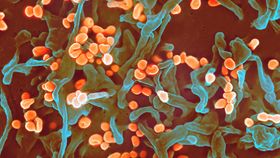


A person in the UK has died after falling sick with Lassa fever, the UK Health Security Agency (UKHSA) has said.
The rest of this article is behind a paywall. Please sign in or subscribe to access the full content.The UKHSA announced on February 9, that it had identified two confirmed cases of Lassa fever in the East of England and another “probable” case was under investigation. That “probable” case has now been confirmed and has died, bringing the total number of cases in the UK to three.
“We confirm the sad death of a patient at our trust, who had confirmed Lassa fever. We send our deepest condolences to their family at this difficult time,” a Bedfordshire Hospitals NHS Foundation Trust spokesperson said in a statement.
Despite this death, the UKHSA maintains that the risk to the general public remains very low.
All three of the cases are from the same family and are known to have been linked to recent travel to West Africa, where the virus is endemic in the population.
Lassa fever is an acute viral hemorrhagic illness caused by the Lassa virus. Around 80 percent of people infected with the Lassa virus have no symptoms, but some can develop a severe disease involving tiredness, fever, and weakness, followed by a headache, sore throat, muscle pain, chest pain, nausea, vomiting, diarrhea, cough, and abdominal pain.
According to the US Centers for Disease Control and Prevention, between 100,000 to 300,000 infections occur each year, with approximately 5,000 deaths.
Humans typically become infected with the virus through exposure to food or household items contaminated with urine or feces of infected Mastomys rats (Mastomys natalensis) found in sub-Saharan Africa.
The latest cases are the first identified in the UK for over a decade. Before this latest outbreak, there have been just eight cases of Lassa fever reported in the UK since 1980, all of which have been imported from people traveling to parts of the world where the virus is endemic. In all of these cases, there was no onward transmission to others and the virus was successfully contained.


 1
1