Nature
 PUBLISHED





The Clarion-Clipperton Zone exists in the Pacific Ocean between Hawaii and Mexico and has seen a large amount of interest for its potential for deep-sea mining. To mitigate the impact this would have on any deep-sea critters, we first need to identify what those creatures are. Enter the Sustainable Seabed Knowledge Initiative: One Thousand Reasons campaign, a project designed to describe 1,000 deep sea species from this area by the end of 2030.
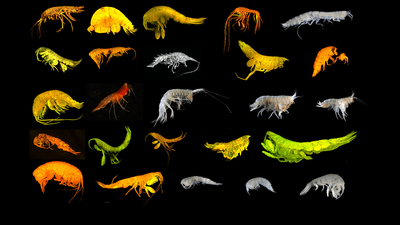
The rest of this article is behind a paywall. Please sign in or subscribe to access the full content.Since the project launched in February 2024, 24 new species have been discovered in the six million square kilometers of the Clarion-Clipperton Zone (CCZ). Many species have been observed there, but lack of funding meant they hadn’t been formally described, which is a vital process for each species to receive proper conservation access in the future.
“This was a truly collaborative process that allowed us to achieve the ambitious goal of describing more than 20 species new to science within a year - something that would not have been possible if each of us worked independently," said Anna Jażdżewska at the University of Lodz, in a statement.
This section of the project focused on amphipods, tiny scavengers that live in the deep sea. Only 13 species had previously been formally identified in the CCZ. The material for the new species was collected during nine expeditions to four different areas in the CCZ.
One of the new species – Astyra mclaughlinae sp. nov. – is the first of its genus recorded in the northeast Pacific, as well as the most tropical and the deepest ever recorded, explain the authors.
One new species is described not only as a new species but one that belongs to an entirely new superfamily, family, and genus. It belongs in the order Senticaudata but has unusual conical mouthparts. “To find a new superfamily is incredibly exciting, and very rarely happens so this is a discovery we will all remember,” said Dr Tammy Horton.
This whole project is important if we need to answer questions about how deep-sea mining could impact the species in this region. The first steps are identifying these species and then making judgements about the population distributions in order to protect them in the future.
“If continued efforts are made to describe and characterise the fauna using both molecular and morphological methods, ensuring these samples and data are made openly available (as originally proposed by Glover et al. 2018), then within a decade of study (25 species added per year = 250 species) we could be in a position to state that the amphipod fauna of the CCZ is “90% known” rather than “very poorly” known as it is currently generally depicted,” Jażdżewska and Horton write in their report.
The report can be found in a special addition of ZooKeys along with the species papers.