Humans
 PUBLISHED




Over 140 years since shovels broke ground, the construction of the Sagrada Família is finally nearing completion. But what’s taken so long?
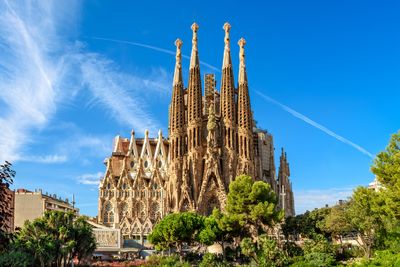
The rest of this article is behind a paywall. Please sign in or subscribe to access the full content.The Sagrada Família is a towering basilica in Barcelona, Catalonia. Designed by the eccentric architect Antoni Gaudí, the structure boasts a distinctive style that beautifully blends naturalistic shapes with complex geometry and fluid, free-form designs.
Even while surrounded by cranes and scaffolding, it remains an incredible sight. The interior is equally awe-inspiring, with tree-like columns, cavernous walls, and stained-glass windows
On February 20, 2026, a major milestone was reached as the final piece of the central tower was laid in place. With the addition of a massive cross made of steel and glass, the church now reaches a height of 172.5 meters, making it both the tallest building in Barcelona and the tallest church in the world. There's still a lot of work to do, but its final form has taken shape.
However, the journey to this point has been incredibly long. Construction first began on March 19, 1882, and has faced over a century of challenges since. Many of these obstacles are tied to the structure’s immense scale and complexity, as well as the difficulty of financing such a massive undertaking solely through private donations.
In 1926, Gaudí died after being hit by a tram when the structure was just 15 to 25 percent complete. His sudden death left the massively ambitious project without its master builder, derailing all progress on the building for over a decade.
But even during Gaudí’s lifetime, the project was mocked for taking so long. He would reportedly respond to critics with the quip: “My client is not in a hurry.”
Another major setback occurred during the Spanish Civil War. In 1936, anti-Christian anarchists broke in and vandalized the site, destroying some of Gaudí's original plans and models. Since the famed architect had died 10 years earlier, the project was left without a complete roadmap. Domènec Sugranyes, Gaudí's disciple who took over the task, was forced to reconstruct the vision from the remaining fragments.
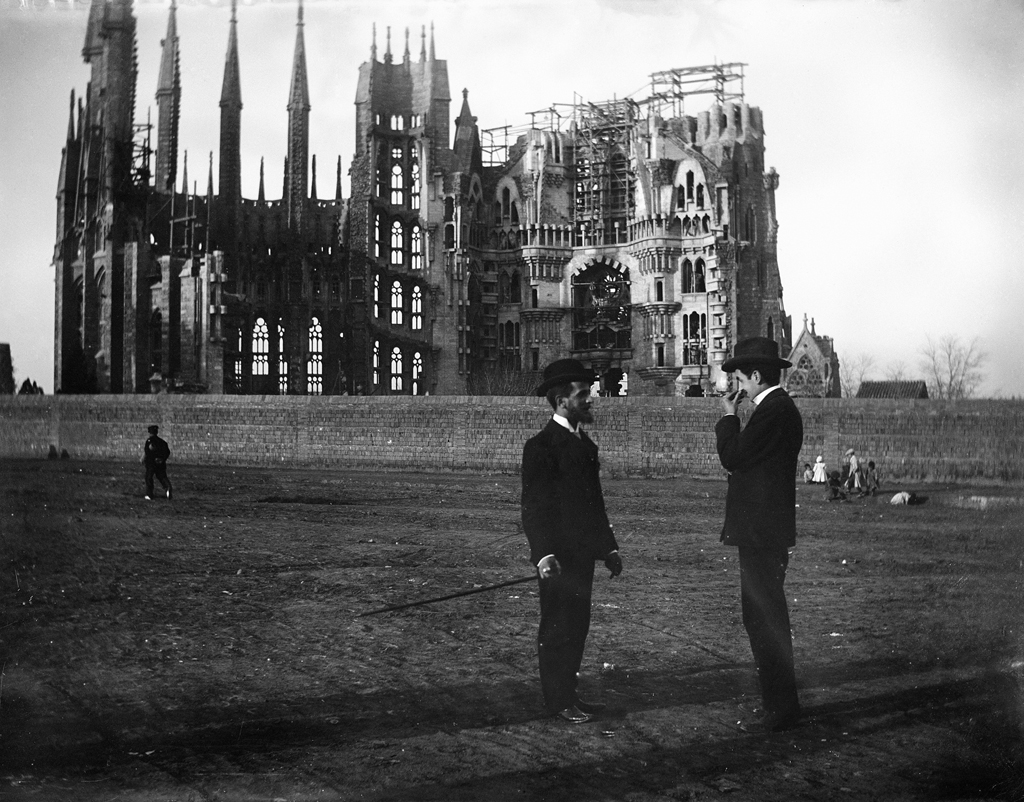
At least 12 people deeply involved in the project were killed during the civil war. During this bloody period, Barcelona became one of the first cities in history to be systematically targeted by prolonged aerial bombardments. In a grim preview of World War II, Nazi German and Fascist Italian aircraft dropped hundreds of bombs on the Catalan capital to support their ally, the nationalist dictator Francisco Franco. Fortunately, the Sagrada Família was spared from the destruction.
Once in power, Franco was largely uninterested in the Sagrada Família throughout his 36-year rule, and progress stagnated. It wasn't until 1976, the year after the dictator died, that the bell towers were finally completed, marking the first significant milestone.
Since some parts of the basilica are now over a century old, they have to be refurbished. Architects, engineers, and builders are simultaneously restoring the oldest sections while completing newer bits.
In 2020, construction was halted for the first time since the Spanish Civil War due to the COVID-19 pandemic. This was a big blow to the project, interrupting the steady progress that had been made in recent years.
"We had forecast to finish the work in 2026. Regretfully, this will not be possible," Xavier Martinez, Sagrada Família's director general, told Reuters in May 2021.
As of 2026, construction continues and the basilica appears to be making good progress. But don’t hold your breath for an official completion date.
"It could be in 2030, 2035, 2040. I would be lying if I were to say a precise date," said Martinez.