Health and Medicine
 PUBLISHED





The world's top infectious killer, tuberculosis (TB), has plagued humans for thousands of years, and it isn't going anywhere just yet. Since being scientifically identified in 1882, the disease has killed over 1 billion people – that’s more people than smallpox, malaria, HIV/AIDS, cholera, and the flu combined. A few decades ago, some were confident this bacterial burden could be stamped out in the US and beyond, but now, it’s slowly creeping back with a vengeance.
The rest of this article is behind a paywall. Please sign in or subscribe to access the full content.TB is an infection caused by the bacterium Mycobacterium tuberculosis that usually attacks the lungs, although it can impact any part of the body with deadly efficiency. Highly contagious, it's spread by inhaling tiny airborne droplets from the coughs, splutters, and tainted breath of an infected person.
But it can play strange games with its hosts. Some people can be infected and not fall sick, living alongside the bacteria with no qualms, while others develop a nasty array of symptoms, including a hacking, lingering cough and chest pain. The disease is treatable with antibiotics, but it can be fatal if treatment isn’t received.
When these drugs first arrived in the 1950s, the disease was decimated. Suddenly, this long-standing rival seemed to be conquerable. By the late 1980s, deaths from TB had plummeted by 90 percent in the US. However, this success bred a dangerous strain of cockiness. Convinced the disease was heading towards the clinical waste bin of history, the US Congress pulled the plug on direct federal funding for many TB programs in 1972.
Aside from a hiccup in the early '90s, rates of TB had been on a downward trajectory in the US since the advent of antibiotics in the 1950s. Then, around 2021, a new upward trend started to emerge (see graph below).
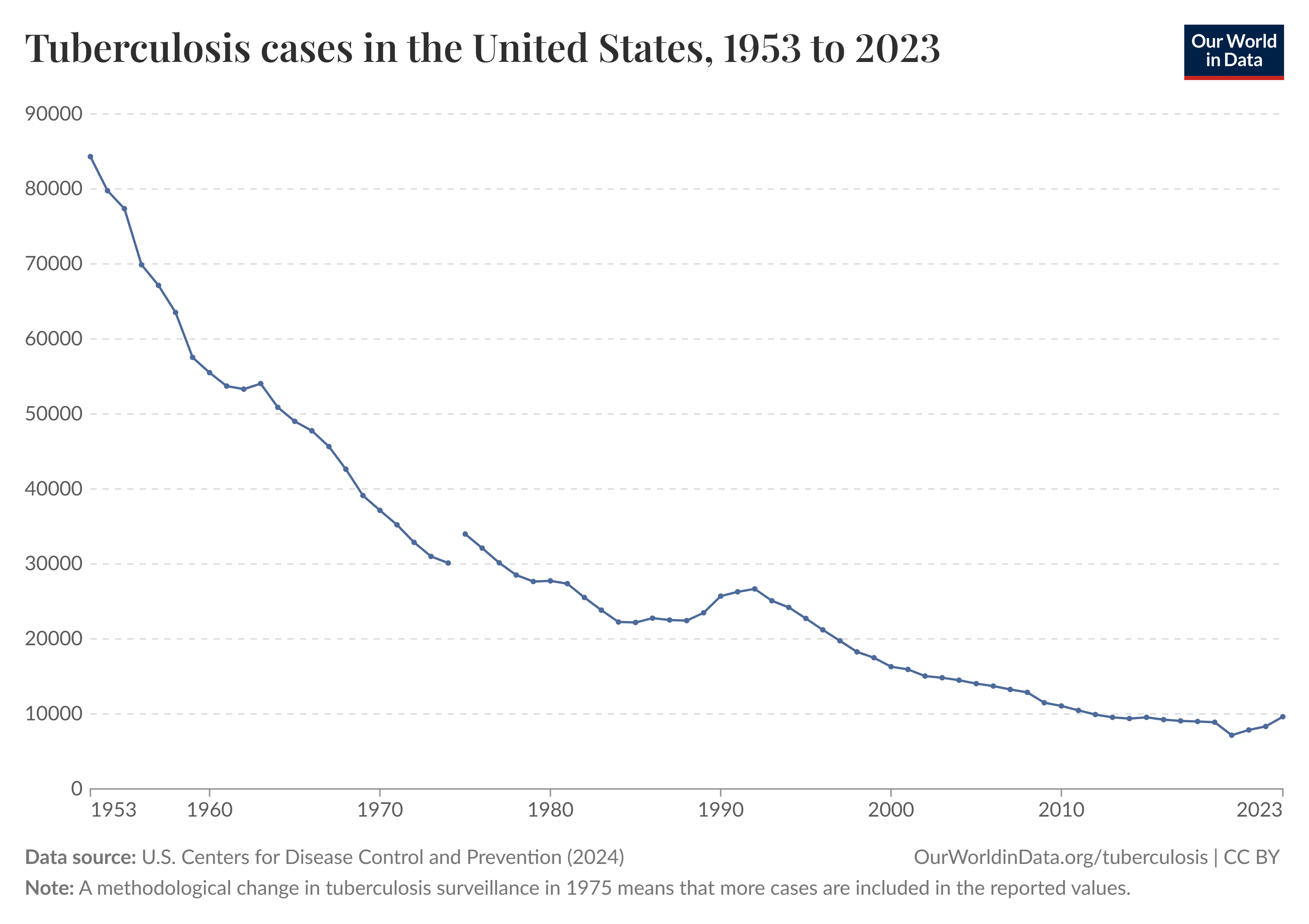
In 2024, Kansas was struck down by one of the largest TB outbreaks in modern US history, with at least 68 active cases and 91 latent cases. This was one part of a wider trend around the country. Between 2021 and 2024, TB cases increased each year, including a 7.9 percent increase in case count in 2024, according to the CDC. It’s worth noting that the US still has one of the lowest TB incidence rates in the world, but those figures suggest something is starting to slip.
Similar things are unfolding across the Atlantic. In the UK, 2024 marked the sharpest single-year spike in TB cases since national surveillance began in the 1990s, leading some experts to suggest the UK might lose its low incidence status. Just like the US, the majority of cases were identified in people born outside the UK, although scientists said the trend was not solely linked to migration patterns; something bigger is going on.
The pattern extends far beyond the West. In November 2025, the World Health Organization reported TB cases rose again 2024, the latest year of complete statistics, reaching their highest level on record.
The recent resurgence of TB has been blamed on the aftershock of the COVID-19 pandemic, which overwhelmed healthcare systems and took attention away from many other diseases. Now that the coronavirus has been largely quelled and health systems have recovered, other infections have had the opportunity to bounce back. However, this much-feared “disease rebound” is, once again, just one piece in this complex puzzle.
Some experts have described the rise of TB as “a canary in a coalmine,” suggesting its resurgence is a reflection of cracks in national public health systems, driven by underfunding and complacency. Similarly, TB has been described as a "social disease of poverty", one that thrives with overcrowded housing, poor nutrition, and grinding working conditions. As living standards drop in many parts of the world, the bacterium is finding itself at home, just as it did in the smoggy streets of Victorian London.
A new threat has also emerged from the US political landscape. In 2025, the Trump Administration took a hacksaw to its global health and humanitarian programmes. One analysis led by scientists at Harvard and Boston Universities warned that these funding cuts could result in 2.5 million pediatric TB cases and 340,000 child deaths over the next decade. If the US were to fully withdraw from the "Global Fund," those projections soar to 8.9 million childhood cases and more than 1.5 million deaths.
“For years, sustained international funding helped drive down TB incidence and mortality in high-burden countries and expand access to diagnosis and treatment for children, who are at especially high risk. The heaviest toll would fall on low-income countries in Africa and Southeast Asia, and in settings where HIV and TB overlap and health systems rely heavily on external aid,” Leonardo Martinez, senior author and assistant professor of epidemiology at Boston University School of Public Health, said in a statement.
While other parts of the world will feel the sting first, it’s worth remembering that infectious diseases don’t need a passport, and they certainly don’t respect national borders. The world is more deeply connected than ever, despite some isolationist efforts, and what happens in one continent rarely stays there. In wise words attributed to the late Dr Paul Farmer: "When it comes to global health, there is no 'them'... only 'us'."


 1
1