Nature
 PUBLISHED




Scientists have finally figured out how tryptamine psychedelics are produced by plants, fungi, and toads, enabling them to recreate this biosynthetic pathway in species that don’t naturally contain any mind-altering compounds. In a tobacco plant, for instance, the researchers were able to generate five different psychedelics, opening the door to large-scale production of these substances for research or therapeutic applications.
The rest of this article is behind a paywall. Please sign in or subscribe to access the full content.“All psychedelic tryptamines start from tryptophan, but the enzyme that converts tryptophan to tryptamine was not known,” said study author Dr Paula Berman from the Weizmann Institute of Science. “We found this enzyme, as well as another enzyme that converts tryptamine to DMT,” she told IFLScience.
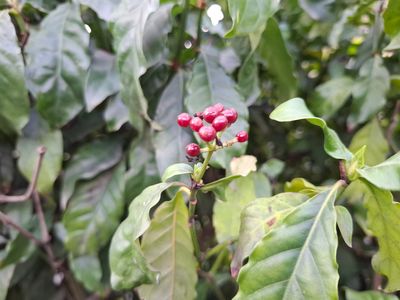
In an Amazonian plant called chacruna (Psychotria viridis) – a traditional component of the psychedelic brew ayahuasca – and an Australian acacia tree, the researchers found that tryptophan is catalyzed by the enzyme tryptophan decarboxylase (TDC) to form tryptamine. This is then converted to the psychoactive compound DMT by a class of enzymes called N-methyltransferases (NMTs).
“And then we saw that these enzymes are kind of promiscuous, so they can also work on metabolizing other psychedelic compounds from other species,” said Berman. For instance, depending on the substrate fed to these enzymes, they can be used to generate psilocybin and its metabolite psilocin, as well as 5-MeO-DMT and bufotenin, both of which are secreted by the Sonoran Desert toad.
“When we noticed that our enzymes can also be used for the other pathways, we realized that we had a big opportunity to reconstruct all these pathways in one plant,” said Berman. To achieve this, the researchers infected a tobacco plant with an agrobacterium that had been engineered to carry the genes for the relevant enzymes.
After growing their altered tobacco plants for just a few weeks, the study authors were able to extract DMT, psilocybin, psilocin, 5-MeO-DMT, and bufotenin from the leaves. They even showed that the same plants could be coaxed into producing artificial psychedelic compounds that don’t occur in nature.
As interest in the therapeutic potential of psychedelic drugs continues to grow, the researchers say their method could provide a safe, reliable, cheap, and eco-friendly supply of these compounds. “There is a need for these active ingredients, but harvesting Amazonian plants that were never cultivated is not the way to go,” study author Professor Asaph Aharoni told IFLScience. “They will end up going extinct very quickly.”
Likewise, major conservation concerns currently surround the Sonoran Desert toad, which has seen its habitat seriously encroached upon by urban development and could really do without having its glands milked by people seeking a psychedelic trip.
Yet the benefits and applications of this approach go far beyond conservation. “For example, you could make a tomato that produces low concentrations of psilocybin or another compound, which you could then use for psychedelic microdosing,” said Berman.
Similarly, the technique could be utilized to create plants with DMT that is readily bioavailable. Usually, this compound is broken down by stomach enzymes and therefore can’t reach the brain when ingested orally, which is why ayahuasca consists of a concoction of plants that block these enzymes using alkaloids called beta-carbolines.
“Another option is to engineer the beta-carboline pathway alongside DMT, so that we can make ayahuasca in a single plant,” said Aharoni. “In the future, if there’s a need to treat people with ayahuasca, then we may be able to basically produce it in one pill,” he says
“Or one tomato fruit,” added Berman. “One day, we'll be able to make tomatoes that you could use for psychedelic microdosing.”
The study is published in the journal Science Advances.