Nature
 PUBLISHED


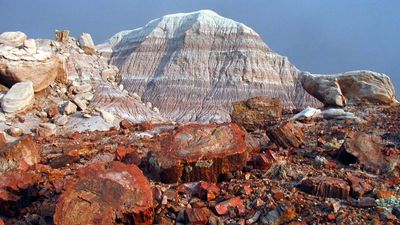


Home to trees that date back over 200 million years, the Petrified Forest National Park in the middle of a desert in Arizona is a window to the past where the fossilized remains of hundreds of species have been discovered.
The rest of this article is behind a paywall. Please sign in or subscribe to access the full content.Petrified wood is a type of fossilized wood, alongside mummified wood and submerged forests. In petrified wood, the organic materials get gradually replaced by minerals, or minerals settle in between the existing cell walls of the wood. The former is known as replacement, while the latter is called permineralization.
Anything from calcite to pyrite, silica, and even opal can move in – but it takes some pretty specific conditions for the tree to survive long enough for this to happen. Typically, you’re looking at a few thousand to a few million years, and a tree can only survive that long if it’s protected from the elements and organisms that would break it down.
The most common way organic remains are protected from the decomposition ecosystem is by getting buried very soon after death by some kind of sediment, be that mud or volcanic ash. As these layers build up, they compress and lithify, which means they turn to rock. That’s why we find fossils of dead animals smushed between layers in cliff faces.
The petrified logs in the national park in Arizona once sat in sediments known as the Chinle Formation. Around 60 million years ago, they started to get pushed upward by tectonic forces. This exposed the sediment layers to erosion, and over time more and more fossils have been revealed by wind and water.
As well as petrified wood, fossils of other plant and animal life have been found in the park, including Late Triassic ferns, phytosaurs, huge amphibians, and early dinosaurs. The rich variety and abundance of fossils here has meant that thieving has become a big problem, and while pocketing a piece of petrified wood might seem like a small crime, it can significantly harm the science.
Removing a relic from its original location reduces the amount of archaeological information to almost zero, explained ex-Petrified Forest National Park curator Wendy Bustard, and once you’ve picked them up, you can’t just pop them back. By all means, visit the national park, but if you see some petrified wood, don't pick it up, or else it’s believed you'll have bad luck all year.
How to get there: If you’re overseas, Phoenix, Arizona is one of the closest major airports, and from there, you want to head for Holbrook.
This article first appeared in Issue 21 of our digital magazine CURIOUS. Older issues of CURIOUS are free for all users. To access new issues, become an All Access Member.